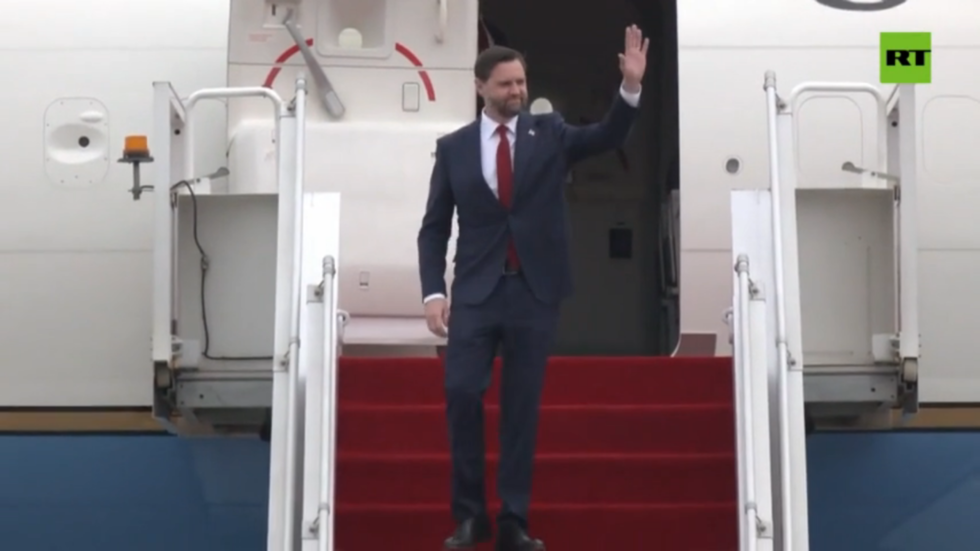
Despite the air of mistrust, Pakistani officials hope that if the talks yield progress, they could continue into Sunday and Monday
Published 11 Apr, 2026 02:10
| Updated 11 Apr, 2026 09:13
High-level Iranian and US delegations have arrived in Islamabad for what the Pakistani prime minister has called a “make-or-break moment” in efforts to turn a fragile ceasefire into a broader agreement.
Parliament Speaker Mohammad Bagher Ghalibaf is leading the Iranian side; US Vice President J.D. Vance heads the American team.
Iran has arrived with a message of deep mistrust. Ghalibaf said Tehran has goodwill despite the US attacking Iran “twice within less than a year” in the middle of negotiations.
Vance struck a similar tone, saying earlier that he expects productive talks while warning Iran not to “play” the US.
US President Donald Trump has projected confidence and threat in equal measure, saying the Strait of Hormuz will be reopened “with or without” Iran’s cooperation, as he reportedly prepares military options in case the talks collapse.
“We don’t need a back-up plan… we’ve hit them hard, our military is amazing,” Trump told journalists after wishing Vance good luck.
Key developments:
- Trump has summed up what a good deal with Iran looks like, saying: “No nuclear weapon. That’s 99% of it,” while adding that the Strait of Hormuz “will open automatically.”
- Iran’s team reflects how broadly Tehran is framing the negotiations, reaching far beyond a narrow nuclear discussion. Alongside Ghalibaf are Foreign Minister Abbas Araghchi, who is heading the political track; Abdolnaser Hemmati, leading the economic side; Ali Akbar Ahmadian, overseeing the military file; and Esmaeil Baqaei, handling legal matters.
- The US side appears narrower, with Trump envoy Steve Witkoff and Jared Kushner also expected in Islamabad, although public reporting has offered few confirmed details about the delegation’s composition.
- The Iranian delegation is due to meet with Pakistani Prime Minister Shehbaz Sharif on Saturday morning. Indirect negotiations would reportedly begin later in the day if Israeli attacks on Lebanon stop.
- Israeli strikes have reportedly killed at least 1,953 people in Lebanon since 2 March, including more than 300 killed in Wednesday’s bombardment after the fragile ceasefire was announced.
Follow our live coverage below for continuous updates. You can also read our previous updates here.
Show latestShow oldest
-
11 April 2026
11:36 GMT
Democratic Senate Minority Leader Chuck Schumer has reiterated the call to end the Iran war, arguing that “Americans are paying the price for Trump’s idiocy every day” amid skyrocketing inflation.
Skyrocketing inflation, the highest in years, all because of Donald Trump’s unnecessary, ill-planned, reckless war of choice. It’s another reason we must end this war now. Americans are paying the price for Trump’s idiocy every day. https://t.co/4LWkgD54SU
— Chuck Schumer (@SenSchumer) April 10, 2026
- 11:10 GMT
On a lighter note, some Pakistani attendees in the media center were seen playing traditional instruments, including what appeared to be a daf drum, as well as the stringed rubab and sitar.
- 10:46 GMT
A US official cited by several media outlets has denied reports that America has agreed to unfreeze Iranian assets.
- 10:43 GMT
Government spokeswoman Fatemeh Mohajerani has warned that Iran is pursuing negotiations “with our hands on the trigger,” stressing that the country “will neither retreat from its rights nor back down.”
- 10:29 GMT
Vance has held a bilateral meeting with Pakistani Prime Minister Shehbaz Sharif, the White House has said.
- 10:23 GMT
Mohammad Reza Aref, Iran’s first vice president, has suggested that it is entirely possible to strike a mutually beneficial deal with the US if it negotiates with representatives of ‘America First’.
“However, if we face representatives of ‘Israel First’, there will be no deal; we will inevitably continue our defense even more vigorously than before, and the world will face greater costs,” he warned.
- 09:58 GMT
Fars has released a photo of the Iranian negotiating team working in Islamabad.
- 09:44 GMT
The US has agreed to release Iranian frozen assets in Qatar and other foreign banks, Reuters has reported, citing a senior Iranian source, who welcomed the move as a sign of serious intention to reach a deal.
The source added that the step was “directly linked to ensuring safe passage through Strait of Hormuz,” which is to be discussed in the talks.
Iran’s $6 billion – which were frozen in South Korea in 2019 – was transferred to Qatar in September 2023 as part of a US-Iran prisoner swap for humanitarian use. However, following the Hamas October 7 attacks, Washington and Doha reportedly reached a “quiet understanding” to re-freeze the funds, keeping the assets locked in Qatari banks under US Treasury oversight.
You can READ MORE on the back-and forth around the Iranian assets here and here.
- 09:24 GMT
New Iranian Supreme Leader Mojtaba Khamenei is still reeling from “disfiguring” facial injuries, as well as a leg wound he suffered in US-Israeli strikes, Reuters reported, citing sources close to the cleric.
Khamenei, however, reportedly remains “mentally sharp” and is playing a role in the decision-making via audio conference on such key issues as diplomacy with Washington.

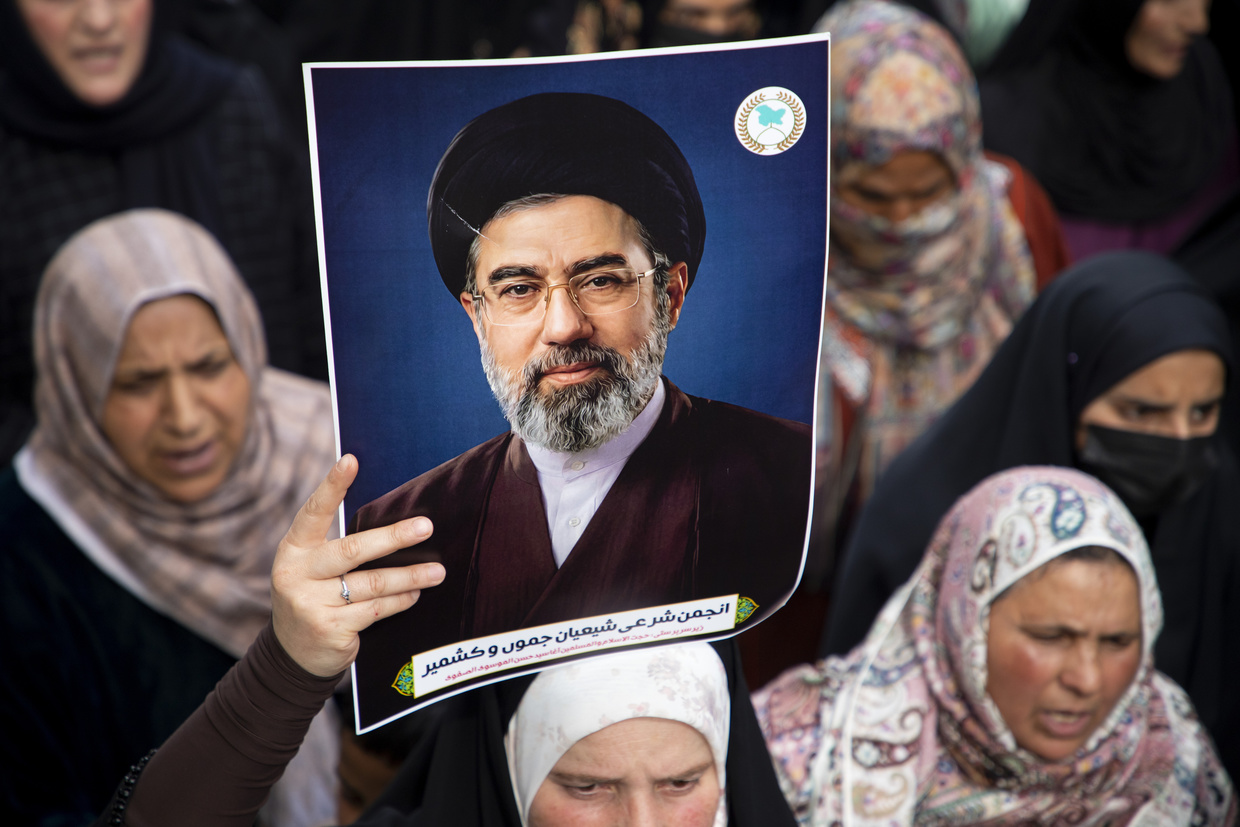
Muslim woman carries a portrait of newly appointed Iranian Supreme Leader Mojtaba Khamenei, Kashmir, India, on March 13, 2026. © Faisal Bashir/SOPA Images/LightRocket via Getty Images
- 09:06 GMT
The Iranian delegation is now holding talks with Pakistani Prime Minister Shehbaz Sharif, and after the meeting will decide on whether to negotiate with the US later in the day, according to Fars news agency.
More
-
11 April 2026
02:10 GMT
The reported full list of Iran’s delegation for the Islamabad talks shows how high the stakes are for Tehran. The 71-member team is led by Parliament Speaker Mohammad Bagher Ghalibaf and includes Foreign Minister Abbas Araghchi, Central Bank Governor Abdolnaser Hemmati, senior Supreme National Security Council figures, deputy foreign ministers, MPs and other senior officials, experts and media staff.
The composition of the team suggests Iran is preparing to negotiate on several tracks at once. Ali Bagheri Kani brings long experience from earlier nuclear talks, while hardline MP Mohammad Nabavian’s presence points to the need for any agreement to pass muster with conservative factions in Tehran. Hemmati’s inclusion also signals that sanctions relief and financial issues are likely to be central from the start.
#WestAsiaWar | #Pakistan releases a list of the names from the Iranian delegation, consisting of 86 officials, experts, & media personnel that have arrived to advance #ceasefire talks with the US Vice PresidentThe Iranian delegation comprises economists, legal teams, the… pic.twitter.com/W7nSrGbIkp
— CNBC-TV18 (@CNBCTV18Live) April 11, 2026
- 02:22 GMT
President Donald Trump said ahead of the Islamabad talks that Washington’s main demand from any deal with Tehran was simply that Iran not obtain a nuclear weapon – a generic objective the Islamic Republic has long denied pursuing, and one that had already dominated years of diplomacy before the latest war.
“No nuclear weapon. That’s 99% of it,” Trump said of his vision for a good deal, adding that the Strait of Hormuz would reopen “automatically” and “fairly soon” – “with or without” Iranian cooperation.
Trump’s remarks narrowed expectations for the talks to the same core nuclear issue that has shaped US-Iran negotiations for years, while also presenting the reopening of Hormuz as a win even though the crucial waterway had been functioning freely before the US and Israel attacked Iran on February 28.
.@POTUS: "No nuclear weapon. That's 99% of it." https://t.co/pwqA8I9oZRpic.twitter.com/IEQZNl4SFb
— Rapid Response 47 (@RapidResponse47) April 10, 2026
- 02:30 GMT
Iranian Parliament Speaker Mohammad Bagher Ghalibaf struck a deeply sceptical tone on arrival in Islamabad, saying Tehran was approaching the talks with “goodwill” but not trust after what he described as repeated American betrayal during earlier diplomatic efforts.

“Twice within less than a year, in the middle of negotiations, and despite the Iranian side’s good faith, they attacked us and committed numerous war crimes,” Ghalibaf said. “We have goodwill, but we do not have trust.”
He added that Tehran would only show readiness for an agreement if Washington was “ready for a genuine agreement and to grant the rights of the Iranian nation”.
Ghalibaf also warned the US against using the talks as what he called a “futile performance” or a “deception operation”, saying Iran was prepared to defend its interests by relying on its own capabilities if diplomacy again proved to be a cover for pressure or attack.
- 02:42 GMT
Israel has reportedly agreed to halt strikes on Beirut at the request of the US, Haaretz said, citing an unnamed diplomatic source who claimed there were no longer “significant military targets” in the Lebanese capital. There has been no official Israeli confirmation.
- 02:54 GMT
Israel has confirmed it will begin formal talks with Lebanon in Washington on Tuesday, but rejected the Lebanese framing that the meeting would include the discussion of a “ceasefire.”
Lebanese officials say the talks are meant to lay out both a ceasefire and a path to direct negotiations. Israel, by contrast, is insisting it will not discuss a ceasefire with Hezbollah and is instead focused on disarming the group and pursuing broader “peaceful relations.”
Israel’s offensive in Lebanon since March 2 has killed 1,888 people and wounded 6,092 others, according to the Lebanese Health Ministry. The April 8 bombardment alone involved “over 100 strikes within minutes,” leaving more than 300 dead and in excess of 1,100 injured.
- 03:13 GMT
The economic fallout from the Middle East war will not end with a ceasefire, according to the heads of the World Bank and the IMF, who have both warned that the conflict is already dragging on growth, fuelling inflation and disrupting trade and energy markets.

World Bank President Ajay Banga told Reuters that even in a baseline scenario with an early end to the war, growth in emerging markets and developing economies could be lowered by 0.3 to 0.4 percentage point, while a longer conflict could cut growth by as much as 1 percentage point. Inflation in those economies could rise by 200 to 300 basis points in the baseline scenario, he said.
The IMF has struck a similar tone. Managing Director Kristalina Georgieva said the war would leave a lasting scar on the global economy even if peace is reached, warning that the conflict has already driven up oil and gas prices, damaged confidence and dimmed the outlook for many economies.
- 03:20 GMT
Al Jazeera has aired exclusive footage showing damage across Qatar after Iranian strikes launched in response to the US-Israeli attack on Iran. The report, from the programme What Lies Hidden Is Greater, shows blast sites, debris and interception operations at and around Al Udeid air base, early-warning radar sites in northern Qatar, Ras Laffan industrial city and other roads, neighbourhoods and infrastructure.
Part of the footage appears to show damage to the AN/FPS-132 early-warning radar at Al Udeid after the Iranian strike on March 3, when Qatar said one Iranian missile hit the base without causing casualties. Neither Qatar nor the US has publicly confirmed the extent of any damage to the radar itself.
💢Al Jazeera shows damage from Iranian strikes across QatarA new episode of AJA’s “What Lies Hidden Is Greater” airs exclusive footage documenting damage inside Qatar following Iranian strikes after the U.S.-Israeli attack on Iran.The investigation shows impacts across:➤ Al… https://t.co/gEoyPB3s1ppic.twitter.com/P1PkytqTXx
— Drop Site (@DropSiteNews) April 10, 2026
- 03:38 GMT
The fragile ceasefire between Iran and the US appeared to be largely holding into Saturday, with no confirmed new Iranian missile or drone launches reported since Wednesday.
The Islamic Revolutionary Guard Corps previously said Iran’s armed forces had not carried out any airstrikes against other countries since the ceasefire began, while the Wall Street Journal said attacks on Gulf states appeared to have halted after a burst of launches around the truce announcement.
Over the course of the conflict, Iranian officials have denied responsibility for many reported attacks and, in some cases, framed such claims as provocations or “false flag” operations by the US and Israel designed to drag its regional neighbors into the war.
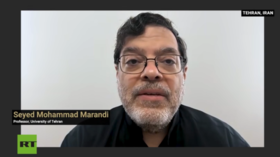
Iranian analyst Seyed Mohammad Marandi told RT India on Thursday that Israel could try to derail both the fragile ceasefire and the Islamabad talks, arguing that continued Israeli strikes on Lebanon show the US is not delivering on its side of the bargain.
- 04:17 GMT
Pakistan has opened a dedicated media center for journalists covering the US-Iran negotiations in Islamabad, with Information Minister Attaullah Tarar saying the facility offers high-speed internet and a range of free services for local and foreign reporters. According to AP, the facility at the Jinnah Convention Center includes workstations, laptops, charging points, live broadcast areas and spaces for press briefings and interviews.
The government has also introduced visa-on-arrival for journalists and official delegations travelling from the US and Iran for the so-called “Islamabad talks,” while shuttle services have been laid on between the media center and a hotel in the city.
- 04:28 GMT
The White House has warned staff against using non-public information about the Iran war to trade or place bets on financial markets, according to multiple reports earlier this week citing administration officials.
The reminder, reportedly sent in a March 24 email from the White House Management Office, came after unusual market activity before several Trump policy announcements on Iran.
Reports said more than $760 million in oil futures changed hands within minutes before Trump announced a five-day pause in planned strikes on Iranian infrastructure, while several Polymarket accounts also made well-timed bets on this week’s ceasefire.
More